

Thailand in 2026: A Traveler's Snapshot
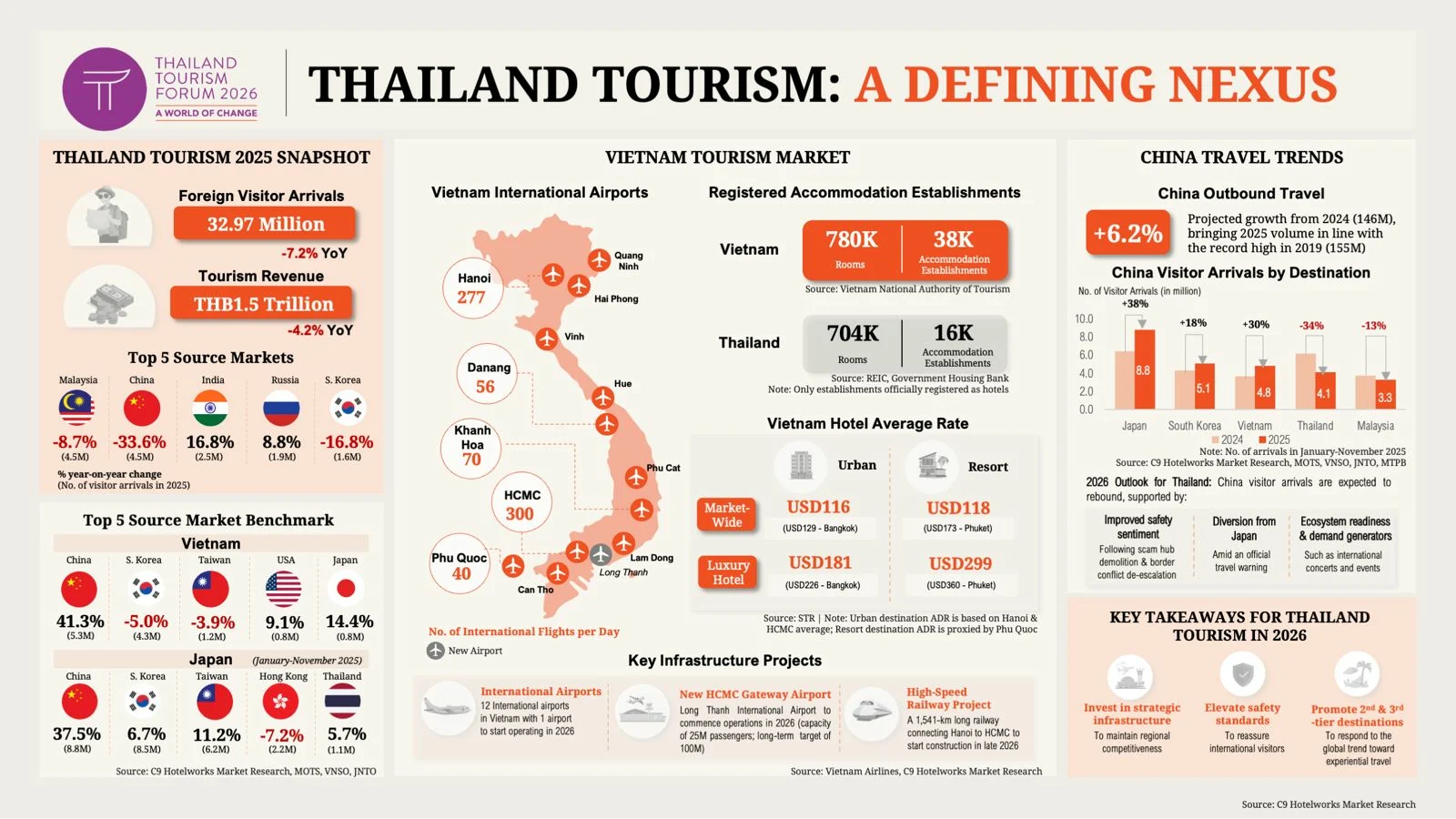
Thailand is gearing up for a significant surge in tourism as we move into 2026. The country has been heavily investing in its tourism infrastructure, and the effects are starting to show. Recent improvements include expansions to Suvarnabhumi Airport in Bangkok, with a focus on increasing capacity and streamlining passenger flow. There’s also been considerable progress on the high-speed rail project connecting Bangkok with key destinations in the north and northeast, although full completion is still ongoing.
The Thai government aims to attract 40 million tourists and generate 2.5 trillion baht in tourism revenue by 2026, according to the Tourism Authority of Thailand. This goal represents a substantial increase from pre-pandemic levels and signifies a strong commitment to rebuilding the sector. These initiatives aim to enhance the overall travel experience, making Thailand more accessible and appealing to a wider range of visitors.
Improved infrastructure is expected to shift tourist distribution. While Bangkok and the southern islands will likely remain popular, increased accessibility to the north and northeast (Isan) should lead to a more even spread of visitors. This will help alleviate pressure on overtouristed areas and support local economies in less-visited regions. Tourism in these areas is expected to grow.
However, increased accessibility also presents challenges. Popular destinations like Phuket and Chiang Mai may experience greater crowds, making careful trip planning and consideration of alternative locations more important. The Thai government recognizes the need to manage growth sustainably, and responsible tourism will be key.
Weather Patterns & Peak Seasons
Thailand experiences three main seasons: the cool/dry season (November to February), the hot/dry season (March to May), and the rainy season (June to October). Understanding these patterns is important for planning your trip. The cool/dry season, from November to February, offers pleasant temperatures and low humidity across most of the country. This is peak season, so expect higher prices and more crowds.
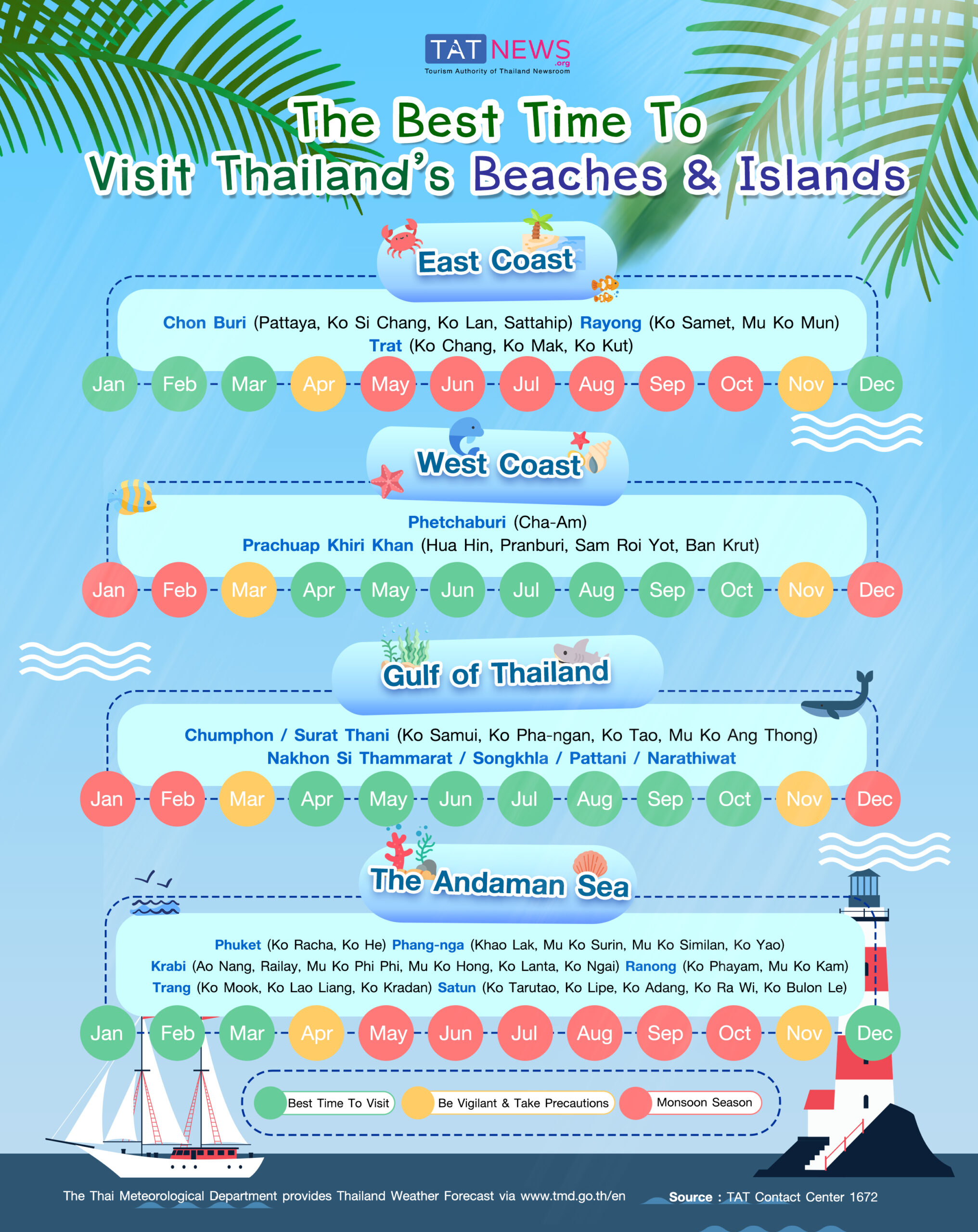
For beach lovers, the Andaman coast (Phuket, Krabi, Phi Phi) is best visited from November to April when the seas are calm and the weather is sunny. The Gulf of Thailand (Koh Samui, Koh Phangan, Koh Tao) has a slightly different pattern, with the best weather from February to September. The rainy season does bring afternoon showers, but it rarely lasts all day, and it can actually be a good time to visit if you’re looking for lower prices and fewer tourists.
Chiang Mai, in the north, experiences a more pronounced cool season. From November to February, temperatures can drop significantly, especially at night, making it ideal for trekking and outdoor activities. The hot season can be quite intense, with temperatures often exceeding 35°C (95°F). The rainy season brings lush landscapes and fewer tourists, but be prepared for occasional downpours.
The term 'rainy season' does not mean constant rain. Showers are typically short and sharp, often in the afternoon, leaving ample time for sightseeing. The landscapes are at their most lush during this time. Adjusting expectations and being prepared with appropriate clothing and gear, while remaining flexible, will help you embrace the weather.
- Cool/Dry Season (November-February): Pleasant temperatures, low humidity, peak season prices.
- Hot/Dry Season (March-May): High temperatures, low humidity, good for those who enjoy the heat.
- Rainy Season (June-October): Afternoon showers, lush landscapes, lower prices, fewer tourists.
Thailand's Climate & Tourist Crowds by Region (2026 Outlook)
| Region | Season | Average Temperature (°C) | Rainfall | Tourist Crowds |
|---|---|---|---|---|
| Bangkok | Cool/Dry (Nov-Feb) | 20-30 | Low | High |
| Bangkok | Hot/Dry (Mar-May) | 28-35 | Very Low | Medium |
| Bangkok | Rainy (Jun-Oct) | 27-33 | High | Low |
| Chiang Mai | Cool/Dry (Nov-Feb) | 15-25 | Very Low | High |
| Chiang Mai | Hot/Dry (Mar-May) | 25-32 | Low | Medium |
| Chiang Mai | Rainy (Jun-Oct) | 24-30 | High | Low |
| Phuket | Cool/Dry (Nov-Feb) | 24-30 | Low | High |
| Phuket | Hot/Dry (Mar-May) | 28-34 | Low | Medium |
| Phuket | Rainy (Jun-Oct) | 26-32 | High | Low |
| Koh Samui | Cool/Dry (Dec-Feb) | 25-30 | Low | High |
| Koh Samui | Hot/Dry (Mar-May) | 28-34 | Low | Medium |
| Koh Samui | Rainy (Sep-Dec) | 25-31 | High | Low |
Illustrative comparison based on the article research brief. Verify current pricing, limits, and product details in the official docs before relying on it.
New Infrastructure: Getting Around Thailand
Thailand’s transportation network expansion is changing how travelers move around the country. Suvarnabhumi Airport in Bangkok has substantial upgrades, including a new terminal and improved connectivity to the city center via the Airport Rail Link. Don Mueang International Airport, used for low-cost carriers, is also undergoing renovations to increase capacity.
The high-speed rail project has faced delays. As of late 2025, the Bangkok-Nakhon Ratchasima line is operational, reducing travel time to the northeast. Further extensions to Chiang Mai and other key destinations are planned, but completion dates remain uncertain. The network is improving but not yet fully interconnected.
New highway routes are also being constructed, improving road access to many regions. However, traffic congestion in Bangkok remains a major issue. Utilizing the BTS Skytrain and MRT subway systems is the most efficient way to navigate the city. Domestic flights are still a convenient option for longer distances, with airlines like Thai Airways, Bangkok Airways, and AirAsia offering extensive networks.
Ferry services to the islands have improved with newer, faster vessels and more frequent departures. Sea conditions during the rainy season can cause cancellations, so checking the forecast before traveling is essential. Buses remain a popular and affordable option for budget travelers, though journey times can be long.
- Airport Rail Link (Bangkok): Efficient connection between Suvarnabhumi Airport and the city center.
- High-Speed Rail (Bangkok-Nakhon Ratchasima): Reduces travel time to the northeast.
- BTS Skytrain & MRT Subway (Bangkok): Best way to avoid traffic congestion.
Bangkok: Beyond the Temples
Bangkok is often the first stop for visitors to Thailand. The city blends ancient traditions with modern life. While iconic temples like Wat Arun and Wat Pho are must-sees, there is much more to explore beyond the usual tourist trail. Improved airport access via the Airport Rail Link makes getting to and from the city center easier.
Explore neighborhoods like Thonburi, on the west bank of the Chao Phraya River, for a glimpse of traditional Thai life. Take a longtail boat tour through the canals to discover hidden temples and local markets. Yaowarat (Chinatown) offers a vast array of street food stalls. For art enthusiasts, the Bangkok Art and Culture Centre (BACC) showcases contemporary Thai art.
Bangkok’s street food scene is renowned. From Pad Thai to mango sticky rice, there are dishes to satisfy every palate. Try new things, but be mindful of food safety and hygiene by choosing busy, clean-looking stalls. Rooftop bars offer city skyline views, ideal for enjoying a cocktail at sunset.
Navigating Bangkok’s traffic can be challenging. The BTS Skytrain and MRT subway are the most efficient ways to get around. Taxis and tuk-tuks are available; agree on a price before your journey. Ride-hailing apps like Grab offer convenience and transparency. The city is diverse, with always something new to discover.
- Wat Arun (Temple of Dawn): Iconic riverside temple.
- Wat Pho (Reclining Buddha): Home to a giant reclining Buddha statue.
- Yaowarat (Chinatown): Street food paradise.
- Bangkok Art and Culture Centre (BACC): Contemporary Thai art.
Bangkok Hidden Gems
- Old Siam Shopping Plaza - A vintage haven with retro clothing, collectibles, and antique furniture. Located at 111 Charoen Krung Rd, Talat Noi, Samphanthawong, Bangkok 10100. Open daily 10:00 AM - 8:00 PM. Price range: ฿50 - ฿5000+ depending on items.
- Wat Ratchabophit Sathitmahasimaram Ratchawararamphikkhathat - A stunning temple complex blending Thai and European architectural styles. Situated at 2 Soi Ratchabophit, Phra Borom Maha Ratchawang, Phra Nakhon, Bangkok 10200. Open daily 8:00 AM - 5:00 PM. Entry fee: ฿50.
- Khlong Lat Mayom Floating Market - A more local and less crowded floating market experience. Located at Khlong Lat Mayom, Bangkok 10520. Open Saturdays and Sundays 8:00 AM - 5:00 PM. Food prices vary, expect around ฿100-฿300 per person.
- Bangkokian Museum - A charming museum showcasing traditional Thai life and artifacts in a beautifully preserved traditional house. Found at 238 Soi Phetchaburi 5, Phetchaburi Rd, Ratchathewi, Bangkok 10400. Open Wednesday - Sunday 10:00 AM - 5:00 PM. Admission: ฿100.
- Rod Fai Market Ratchada (Train Night Market Ratchada) - Known for its vintage finds, street food, and vibrant atmosphere. Located at 56 Pracha Rat 2 Rd, Huai Khwang, Bangkok 10320. Open Thursday - Sunday 6:00 PM - 1:00 AM. Food and shopping prices vary.
- The Artist's House (Baan Silapin) - A traditional Thai house transformed into an art space, offering workshops and performances. Situated at 387 Soi Nana, Charoen Nakhon Rd, Khlong San, Bangkok 10600. Open Tuesday - Sunday 10:00 AM - 6:00 PM. Entry is free, workshops have separate fees.
- Princess Mother Memorial Park - A peaceful botanical garden dedicated to Her Royal Highness Princess Srinagarindra. Located at 239 Charoen Rat Rd, Khlong San, Bangkok 10600. Open daily 5:30 AM - 7:00 PM. Free admission.
Island Life: Phuket, Koh Samui & Beyond
Thailand's islands offer diverse experiences, from Phuket's busy beaches to Koh Lanta's relaxed atmosphere. Phuket, the largest island, provides a wide range of accommodation, dining, and entertainment. Koh Samui is known for its palm-fringed beaches, luxury resorts, and active nightlife. Improved ferry services and increased flight options make island hopping easier.
Koh Phi Phi, known for its limestone cliffs and turquoise waters, remains popular but can get extremely crowded. Krabi province offers a quieter alternative with beautiful beaches and rock climbing. For a more off-the-beaten-path experience, explore islands like Koh Lanta, Koh Yao Yai, or Koh Mak.
Overtourism is a growing concern. Responsible tourism practices, such as supporting local businesses and respecting the environment, are essential. Choose eco-friendly resorts that prioritize sustainability. Be mindful of waste and avoid single-use plastics. Visiting during the shoulder seasons (April-May and September-October) can help avoid crowds.
Water sports like snorkeling, diving, and kayaking are popular. Choose reputable operators who prioritize safety and environmental protection. Accommodation ranges from budget guesthouses to luxury villas, catering to all tastes and budgets. The islands offer something for everyone, but conscious travel is increasingly important.
- Phuket: Largest island, wide range of options.
- Koh Samui: Palm-fringed beaches, luxury resorts.
- Koh Phi Phi: Stunning scenery, can be crowded.
- Koh Lanta: Quieter alternative, beautiful beaches.
Essential Beach Gear for Your 2026 Thailand Adventure

100% mineral sunscreen with SPF 50 · Protects against UVA/UVB rays · Infused with organic Aloe Vera to soothe and hydrate
Protect your skin from the tropical sun with this gentle, mineral-based sunscreen that soothes and hydrates.

Sand-free and quick-drying microfiber material · Highly absorbent and compact for easy packing · Large size suitable for adults
This lightweight, sand-free towel is perfect for drying off after a swim and dries quickly, making it ideal for beach days.

Universal waterproof phone pouch compatible with most smartphones · IPX8 waterproof rating for protection up to 8.9 inches · Ideal for protecting devices during water activities
Keep your phone safe and dry while exploring Thailand's islands and beaches with this reliable waterproof pouch.

Full-face snorkel mask with panoramic anti-fog and anti-leak view · Top dry valve prevents water from entering the breathing tube · Suitable for snorkeling, scuba diving, and swimming
Experience Thailand's vibrant underwater world with this comfortable, leak-proof snorkel mask offering a clear, wide view.

Portable Bluetooth speaker with 24-hour playtime · IPX7 waterproof rating for durability · Rich stereo sound with BassUp technology
Enjoy your favorite music on the beach or by the pool with this durable, waterproof Bluetooth speaker that offers long-lasting battery life.
As an Amazon Associate I earn from qualifying purchases. Prices may vary.
Northern Thailand: Chiang Mai & Cultural Immersion
Chiang Mai and the northern region offer a different experience from the southern beaches. The cooler climate, lush mountains, and rich cultural heritage make it a popular destination for adventure and relaxation. Improved rail links make accessing the north easier, reducing travel time from Bangkok.
undefined, but it’s essential to choose reputable organizations that prioritize animal welfare – avoid places that offer elephant riding.
Trekking opportunities abound in the surrounding mountains, offering stunning views and the chance to experience local hill tribe culture. Be sure to hire a knowledgeable guide and respect the customs of the communities you visit. The cooler climate makes it ideal for outdoor activities, such as hiking, biking, and rock climbing.
I want to be clear: avoid supporting unethical tourism practices. Research elephant sanctuaries carefully and choose those that prioritize rescue and rehabilitation. Be respectful of local cultures and traditions, and dress modestly when visiting temples. The north offers a unique and rewarding travel experience, but responsible tourism is paramount.
- Wat Phra That Doi Suthep: Iconic temple overlooking Chiang Mai.
- Chiang Mai Night Bazaar: Vibrant market with local handicrafts and food.
- Ethical Elephant Sanctuaries: Prioritize animal welfare.
- Hill Tribe Trekking: Experience local culture and stunning scenery.
Thai Cuisine: A Flavorful Journey
Thai cuisine is renowned worldwide for its bold flavors, aromatic spices, and fresh ingredients. From the fiery curries of the south to the fragrant noodle dishes of the north, there’s a dish to satisfy every palate. Regional specialties abound, so be sure to try local delicacies wherever you go. Bangkok is a great place to start, with its incredible street food scene.
Street food is an integral part of Thai culture, and it’s often the most authentic and affordable way to experience the local cuisine. Look for stalls that are busy with locals, as this is a good indication of quality. Be adventurous and try new things, but be mindful of food safety and hygiene. Popular dishes include Pad Thai, green curry, tom yum soup, and mango sticky rice.
Cooking classes are a great way to learn about Thai ingredients and techniques. Many schools offer half-day or full-day courses, where you can learn to prepare your favorite dishes. Be sure to ask about dietary restrictions or allergies before you book. The diversity of Thai flavors is truly remarkable.
When ordering food, don’t be afraid to ask for recommendations or adjustments to the spice level. Most restaurants are happy to accommodate your preferences. Be aware that Thai food can be quite spicy, so start with a mild dish and work your way up. Enjoy the journey – and the incredible flavors!
- Pad Thai: Stir-fried rice noodles.
- Green Curry: Spicy coconut milk-based curry.
- Tom Yum Soup: Hot and sour soup.
- Mango Sticky Rice: Sweet sticky rice with fresh mango.
Which Thai dish are you most excited to try on your next trip to Thailand?
Thailand is famous for its incredible cuisine, and no travel guide would be complete without talking about the food. Whether you are planning your 2026 trip around the updated tourism infrastructure or simply dreaming of your next Thai adventure, we want to know which iconic dish tops your must-eat list. Vote below and share your pick with the Thai Trip Lover community!

No comments yet. Be the first to share your thoughts!