

Thailand's Weather Patterns: A Quick Overview for 2026
Thailand has three main seasons: hot, rainy, and cool. The hot season, March to May, brings high temperatures and humidity. The rainy season follows, June to October, influenced by the southwest monsoon. The cool, dry season runs November to February, generally the most pleasant time to visit. These patterns are becoming less predictable.
Predicting 2026 weather with certainty is impossible. Global monsoon patterns are shifting, affecting Thailand. Expect variations from typical seasonal behavior. Geography matters too; northern Thailand has a more pronounced cool season than the southern islands.
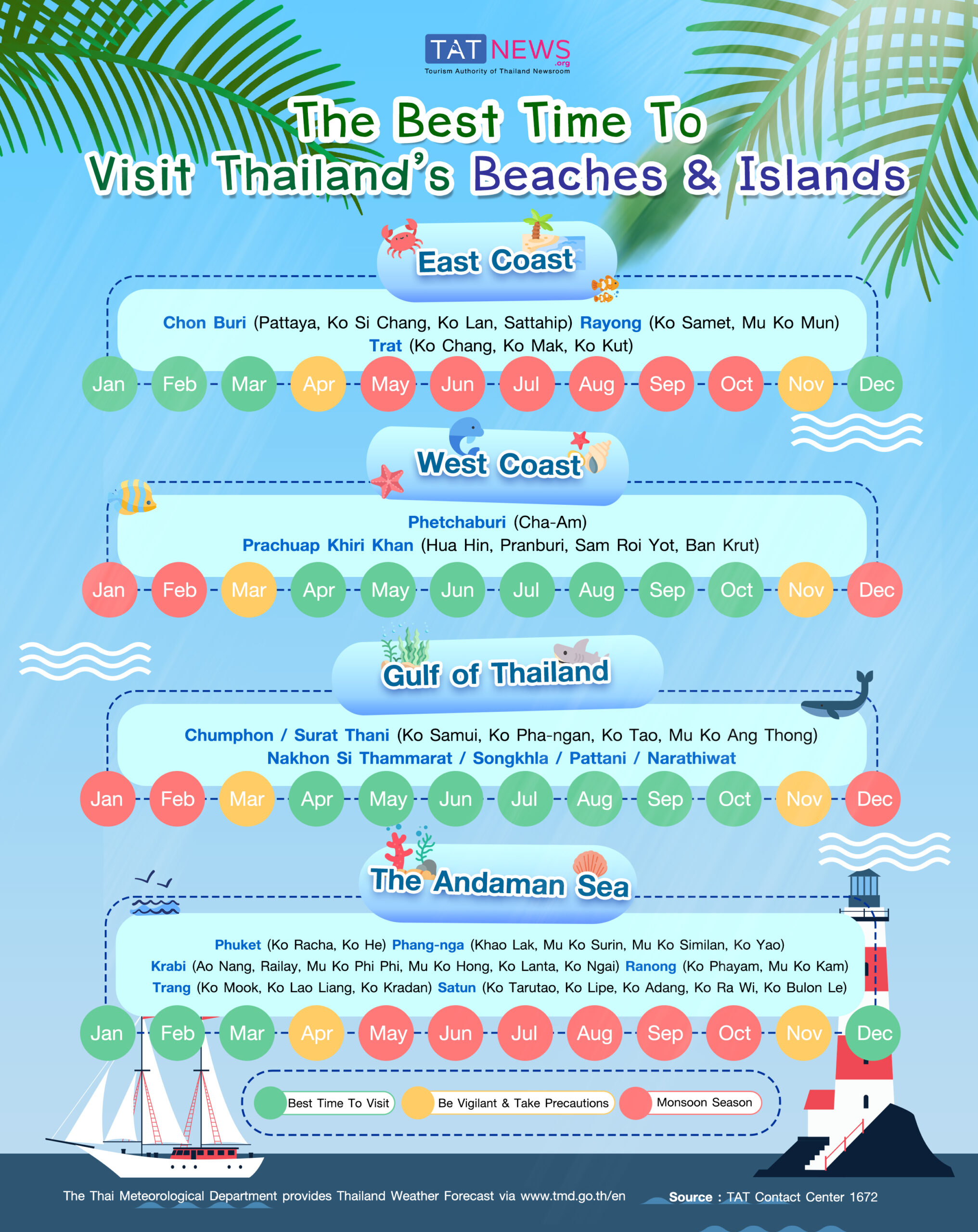
Two main monsoons affect Thailand. The southwest monsoon brings rain to the Andaman coast (west) from May to October. The northeast monsoon impacts the Gulf coast (east) from September to December. This means sunshine can exist in one area while another has rain. Understanding these patterns helps plan trips, but flexibility is essential.

The Cool & Dry Season (November – Early April): Peak Tourist Time
The cool season, November through early April, is often considered the best time to visit Thailand. Temperatures are comfortable, 20-30°C (68-86°F), with low humidity and sunshine. This weather is ideal for exploring temples, relaxing on beaches, and outdoor activities. Expect larger crowds due to high demand.
Regional differences persist. Chiang Mai and northern cities can be cool, especially at night in December and January, sometimes dropping into the teens Celsius. Bangkok stays warm and pleasant, while southern islands offer near-perfect beach weather. Flights and accommodation are pricier during this peak season, so book ahead.
This season includes popular festivals. Yi Peng (Lantern Festival) in Chiang Mai, usually in November, is a spectacular event. Chinese New Year, often in January or February, brings celebrations nationwide. Songkran, though technically starting the hot season, sometimes begins celebrations at the cool season's end.
- November - February: Ideal temperatures, low humidity, peak tourist season.
- Chiang Mai: Can be cool, especially at night.
- Bangkok: Warm and pleasant.
- Southern Islands: Near-perfect beach weather.
Navigating the Hot Season (April – June): Heat and Songkran
The hot season, April to June, brings temperatures over 35°C (95°F) and high humidity. It's less popular but offers advantages like lower prices and fewer crowds. The intense heat makes strenuous activities difficult during midday.
April features Songkran, the Thai New Year water festival.) It's a fun, lively experience, but expect to get wet. Travel during Songkran can face disruptions from road closures and crowded transport. Book accommodation and transport ahead if traveling then.
To cope with the heat, stay hydrated, seek shade, and plan activities for early mornings or late afternoons. Hotel pools offer a welcome break. Some travelers choose this season for lower prices and the Songkran experience, embracing the heat.
Understanding the Rainy Season (July – October): Myths and Realities
The rainy season, July to October, is often unfairly maligned. Constant rain is a myth; expect short, intense afternoon showers lasting a couple of hours. The rest of the day is often sunny and pleasant. The countryside is lush and green during this time.
Regional variations exist. The Andaman Coast (Phuket, Krabi) sees more rain earlier (July-September), while the Gulf Coast (Koh Samui, Koh Phangan, Koh Tao) gets more rain later (September-October). You can often find sunshine on one coast while the other has showers.
Traveling during the rainy season offers fewer crowds, lower prices on accommodation and tours, and a more authentic experience. Thai Trip Lover's guide notes it's a great time to enjoy Thailand's natural beauty without tourist crowds. Some island boat trips may be cancelled due to rough seas, but this is rare.
Thailand Travel: Dry Season vs. Rainy Season - A Comparison
| Factor | Dry Season (November - April) | Rainy Season (May - October) | Shoulder Season (April/May & Sept/Oct) |
|---|---|---|---|
| Price | Generally higher for accommodation and tours. | Generally lower; potential for significant savings. | Offers a balance – moderate pricing. |
| Crowds | Peak tourist season; expect larger crowds at popular attractions. | Fewer tourists; a more relaxed experience. | Moderate crowds, less congested than peak season. |
| Weather Reliability | Consistent sunshine and lower humidity, particularly December - February. | Expect frequent, often heavy, rainfall. Though, rain is often short-lived. | More unpredictable, with a mix of sunshine and showers. |
| Activity Availability | All activities are generally available. Ideal for outdoor adventures and beach holidays. | Some activities, like boat trips to certain islands, may be limited due to sea conditions. Inland activities are generally unaffected. | Good for a wide range of activities, with fewer disruptions than the rainy season. |
| Humidity | Lower humidity levels, especially in the cooler months. | Higher humidity levels can make it feel warmer. | Moderate humidity levels. |
| Scenery | Landscapes are typically dry and vibrant. | Landscapes are lush and green; waterfalls are at their fullest. | A transition period, with greenery starting to flourish or subside. |
Illustrative comparison based on the article research brief. Verify current pricing, limits, and product details in the official docs before relying on it.
Regional Weather Differences: Where to Go When
Thailand's diverse geography means the best time to visit varies by region. Bangkok is hot and humid year-round, coolest November to February, with rain from May to October. Chiang Mai has a distinct cool season November to February, with significant nighttime temperature drops. The hot season is March to May, and the rainy season June to October.
Phuket and Krabi on the Andaman Coast are best visited during the dry season (November to April). The rainy season brings heavier rain from May to October, with potential for rough seas. Koh Samui, Koh Phangan, and Koh Tao on the Gulf Coast have a different pattern: driest February to September, with heaviest rain October to December.
Month-by-month guide: January/February (cool & dry everywhere), March (warming, still dry), April (hot & dry, Songkran), May (hot & humid, start of rainy season), June-August (rainy season, west coast wetter), September-October (rainy season, east coast wetter), November (transition, good everywhere), December (cool & dry returning).
2026 Weather Predictions and Long-Range Forecasts
Predicting 2026 weather is challenging, with long-range forecasts uncertain. Climate models suggest global trends toward more extreme weather, potentially impacting Thailand with increased rainfall intensity or drought. Specific regional impacts are hard to pinpoint.
Monsoon seasons may become more unpredictable, with delayed starts or shifts in intensity. Stay informed about travel advisories. The U.S. Department of State’s travel information page (travel.state.gov) offers updates on safety and security worldwide, including Thailand.
undefined purchase travel insurance that covers disruptions due to weather-related events. While
Essential Apps and Resources for Thailand Travel
Several apps can be incredibly helpful during your trip. AccuWeather and Windy provide detailed weather forecasts. Grab and Bolt are popular ride-hailing apps for convenient transportation. Google Translate is essential for overcoming language barriers. The Tourism Authority of Thailand website (tourismthailand.org) offers comprehensive travel information.
For safety updates and travel advisories, the U.S. Department of State website (travel.state.gov) is a reliable source. Don’t forget to check Thai Trip Lover (thaitriplover.com) for in-depth guides on various aspects of Thai travel, including cultural insights, attraction recommendations, and more. These resources can help you stay informed and prepared throughout your journey.
When is the best time to visit Thailand? 🌤️
— Visit Tland (@visittland) March 11, 2026
Compare weather, festivals, crowds, and travel costs to choose the perfect time.
Guide:
https://t.co/lVjywfnFD3#ThailandTravel #TravelPlanning



No comments yet. Be the first to share your thoughts!