

Thailand's Rail Expansion: A First Look
Thailand is on the cusp of a major transportation revolution. A new network of high-speed rail lines is being developed, promising to reshape travel across the country. For decades, Thailand’s railway has been a vital, if somewhat slow, part of life for locals and a unique experience for adventurous tourists. Now, it’s getting a significant upgrade.
This isn’t just about faster trains; it's about unlocking economic opportunities and boosting tourism. The Thai government views these rail projects as essential for connecting its regions, easing congestion in Bangkok, and attracting foreign investment. The goal is to create a modern, efficient transportation system that can compete with road and air travel.
The scale of the project is ambitious, with multiple lines planned to connect Bangkok with key economic hubs and tourist destinations. While challenges remain – and timelines are always subject to change – the potential benefits are enormous. We’re looking at a future where exploring Thailand is easier, quicker, and more comfortable than ever before.
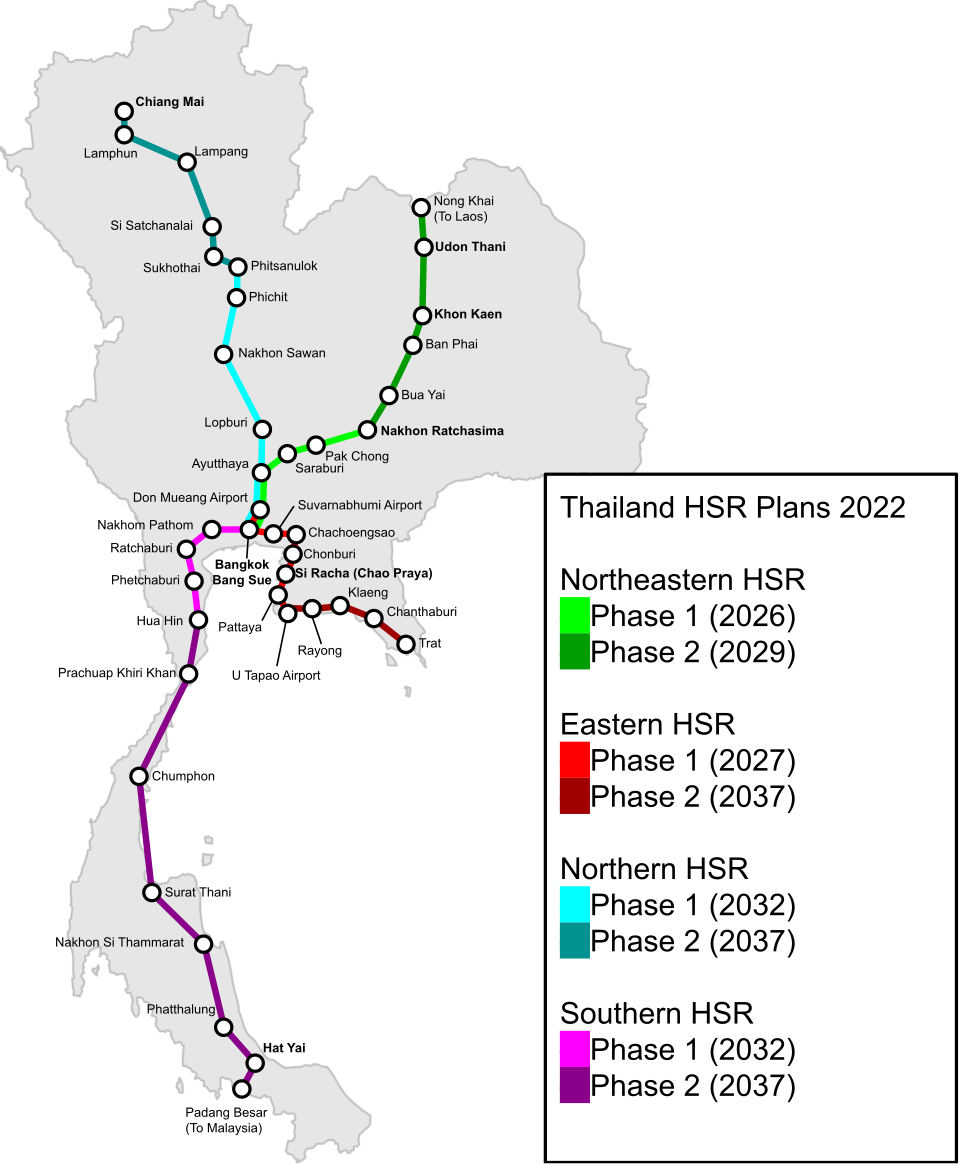
Routes Under Construction: Bangkok to Northeast
The most advanced project in Thailand’s high-speed rail plan is the line connecting Bangkok to Nakhon Ratchasima (Korat) in the Northeast. Construction is well underway, and this route is currently slated for completion in 2026. This is the one most likely to deliver on its promise within the projected timeframe.
The line will span approximately 250 kilometers and include stations at Bang Sue (Bangkok’s main railway hub), Ayutthaya, Saraburi, Pak Chong, and Nakhon Ratchasima. Currently, the train journey from Bangkok to Korat takes around 5-7 hours on conventional rail. The high-speed rail is expected to slash that time to around 1.5 to 2 hours – a dramatic improvement.
While initial cost estimates faced some overruns, the focus now is on delivering a functional and efficient line. The project is being developed with cooperation from China State Railway Group, bringing expertise and investment to the table. This route will be a game-changer for travel to the Isan region, opening up access to its cultural attractions and natural beauty.
The benefits extend beyond speed. The new line will also offer increased capacity, relieving pressure on existing rail services and reducing road congestion. It’s a significant step towards modernizing Thailand’s transportation infrastructure and providing a more sustainable travel option.
Eastern Economic Corridor (EEC) Rail Links
The Eastern Economic Corridor (EEC) is a key driver of Thailand’s economic development, and high-speed rail is a crucial component of its infrastructure. The EEC aims to transform the eastern provinces of Chonburi, Rayong, and Prachinburi into a leading industrial and investment hub.
Several high-speed rail lines are planned within the EEC to support this vision. A key route will connect Bangkok with Rayong and Map Ta Phut, a major industrial port. This will facilitate the movement of goods and people, boosting economic activity in the region. Another line will connect Bangkok with Pattaya, a popular tourist destination.
Potential extensions are also being considered, including a line to Trat province, providing access to the beautiful islands of Koh Chang and Koh Samet. There’s even talk of connecting the EEC rail network with Cambodia, further integrating Thailand into the regional transportation network. This could open up new tourism routes and trade opportunities.
For tourists, the EEC rail links will make it much easier to explore the eastern beaches and islands. No more long bus rides or traffic jams – you'll be able to reach your destination quickly and comfortably. This is a huge win for anyone looking to escape the hustle and bustle of Bangkok and enjoy Thailand’s coastal beauty.
Northern Ambitions: Bangkok to Chiang Mai
The proposed high-speed rail line from Bangkok to Chiang Mai is perhaps the most ambitious and challenging project in Thailand’s rail expansion plan. The distance is considerable – over 700 kilometers – and the terrain is mountainous, presenting significant engineering hurdles.
The proposed route would likely include stations at Ayutthaya, Phitsanulok, and Lampang, before terminating in Chiang Mai. Estimated travel time could be reduced from around 11-12 hours on conventional rail to around 3-4 hours with high-speed rail. That's a significant time saving, but it’s a long way off.
Land acquisition is also a major concern, as the route will traverse through numerous private and public properties. Securing the necessary land rights could be a lengthy and complex process. While the project is still on the drawing board, its feasibility is less certain than the Bangkok-Korat line.
It’s unlikely that this line will be completed by 2026. The project faces significant challenges, and a more realistic timeframe is beyond that. However, if it does come to fruition, it would be a transformative development for tourism in Northern Thailand, opening up access to its cultural treasures and natural landscapes.
Bangkok-Chiang Mai Transportation Options: A Comparison (Estimated 2026)
| Transportation Mode | Cost | Speed | Comfort | Environmental Impact |
|---|---|---|---|---|
| High-Speed Rail (Projected) | Medium | High | High | Medium |
| Flights (Bangkok - Chiang Mai) | Medium to High | Very High | Medium | High |
| Overnight Train (Bangkok - Chiang Mai) | Low to Medium | Low | Medium | Medium |
| VIP Bus (Bangkok - Chiang Mai) | Low | Low to Medium | Low to Medium | High |
| Standard Bus (Bangkok - Chiang Mai) | Low | Low | Low | High |
| Private Car with Driver | High | Medium | High | High |
| First Class Train | Medium | Low | High | Medium |
Illustrative comparison based on the article research brief. Verify current pricing, limits, and product details in the official docs before relying on it.
Ticket Costs and Booking: What to Expect
Predicting ticket prices for the new high-speed rail lines is difficult at this stage. However, we can make some informed guesses based on existing rail fares and international comparisons. Currently, a second-class train ticket from Bangkok to Korat costs around 800-1200 baht. We can expect high-speed rail tickets to be more expensive, potentially in the range of 1,500 to 3,000 baht, depending on the class of service.
Booking is likely to be handled through a combination of online platforms, station kiosks, and potentially mobile apps. The State Railway of Thailand (SRT) is expected to launch a dedicated website and app for booking tickets. It’s also possible that third-party travel agencies will be authorized to sell tickets.
There may be different fare classes available, such as standard, first class, and potentially business class, offering varying levels of comfort and amenities. Discounts or travel passes may also be offered to encourage ridership, particularly for frequent travelers or tourists. Early bird discounts are a possibility.
Competition from low-cost airlines will likely influence pricing. The SRT will need to offer competitive fares to attract passengers away from air travel. It’s reasonable to expect a tiered pricing structure that balances affordability with the premium experience of high-speed rail.
Connecting to Tourist Hubs: Last-Mile Solutions
The success of the high-speed rail network will depend not only on the speed and efficiency of the trains but also on the ease of connecting to final destinations. The “last mile” problem – getting from the high-speed rail station to your hotel or attraction – is a crucial consideration.
At each station, you can expect to find a range of local transportation options, including taxis, buses, songthaews (red trucks), and ride-hailing apps like Grab. However, the availability and convenience of these options will vary depending on the location. Stations in larger cities will likely have more extensive transport links.
The Thai government is also planning improvements to local transport infrastructure to support the rail network. This includes upgrading roads, building new bus terminals, and improving pedestrian access to stations. These improvements are essential for ensuring a seamless travel experience.
It's worth researching local transport options in advance and having a plan for getting from the station to your final destination. Don’t assume that taxis will be readily available at all stations, especially in smaller towns. Having a local SIM card with data will also be helpful for using ride-hailing apps.
Impact on Thailand Tourism: A Broader View
The high-speed rail network has the potential to significantly impact Thailand’s tourism industry. By making travel easier and faster, it could attract more visitors, particularly those who are time-constrained. The improved connectivity will also make it more appealing to explore regions outside of Bangkok.
One of the biggest benefits could be the dispersal of tourism. Currently, a large proportion of tourists concentrate on Bangkok, Phuket, and Chiang Mai. The rail network could encourage visitors to explore lesser-known destinations, such as the Isan region and the eastern beaches. This could help to reduce overcrowding and support local economies.
The rail network could also create new tourism opportunities. For example, day trips from Bangkok to destinations like Ayutthaya or Korat will become much more feasible. This could lead to the development of new tourism products and services.
Overall, the outlook for Thailand tourism with the advent of high-speed rail is very positive. It’s a transformative infrastructure project that has the potential to reshape the country’s tourism landscape and benefit both visitors and local communities. It’s an exciting time to be planning a trip to Thailand.


No comments yet. Be the first to share your thoughts!