
Best Time to Visit Thailand in 2024: Complete Weather Guide for Every Region
Understanding Thailand's Climate Patterns
Thailand's tropical climate creates distinct seasons that vary significantly across the country's diverse regions. Whether you're planning to explore the bustling streets of Bangkok, relax on pristine beaches, or trek through mountainous northern provinces, understanding the weather patterns is crucial for timing your perfect Thai adventure in 2024.
The kingdom experiences three primary seasons, each offering unique advantages for different types of travelers. From the cool, dry months perfect for temple hopping to the vibrant rainy season that transforms landscapes into lush green paradises, Thailand's weather patterns directly influence everything from accommodation prices to festival celebrations.
Thailand's Temperature and Rainfall Patterns Throughout 2024
The Three Seasons of Thailand
Cool and Dry Season (November–February)
The cool and dry season represents Thailand's peak tourist period, and for good reason. During these months, temperatures hover between a comfortable 25–30°C (77–86°F), with minimal rainfall and low humidity levels. This period offers ideal conditions for outdoor activities, from exploring ancient temples in Ayutthaya to island hopping in the Andaman Sea.
Northern regions like Chiang Mai and Chiang Rai experience particularly pleasant weather during this time, with cooler evenings that may require light jackets. The absence of rain makes this season perfect for trekking, cycling tours, and photography expeditions. However, these favorable conditions come with higher accommodation rates and crowded attractions.
Hot Season (March–May)
Thailand's hot season brings intense heat, with temperatures frequently reaching 35–40°C (95–104°F) in central and northern regions. While the heat can be challenging, this period offers several advantages for savvy travelers. Tourist crowds thin out significantly, leading to better deals on hotels and tours.
The hot season culminates with Songkran, Thailand's famous water festival in mid-April. This celebration transforms the sweltering heat into an advantage, as water fights and traditional ceremonies provide refreshing relief. Coastal areas remain more bearable due to sea breezes, making this an excellent time for beach destinations.
Rainy Season (June–October)
Often misunderstood by first-time visitors, Thailand's rainy season doesn't mean constant downpours. Instead, expect intense but brief afternoon showers followed by clear skies. This season brings lush green landscapes, fewer tourists, and significant savings on accommodations and flights.
The rainy season varies considerably by region. While the west coast experiences heavy monsoons, eastern areas like Koh Samui enjoy relatively dry conditions. This seasonal variation allows travelers to find suitable destinations even during the wettest months.
Thailand Regional Weather Guide 2024: Monthly Temperature, Rainfall & Humidity
| Region | Best Months | Temperature Range (°C) | Average Rainfall (mm) | Humidity (%) |
|---|---|---|---|---|
| Central Thailand (Bangkok) | November - February | 25-32 | 15-45 | 65-75 |
| Northern Thailand (Chiang Mai) | November - March | 20-30 | 10-25 | 60-70 |
| Southern West Coast (Phuket) | December - April | 26-33 | 30-80 | 75-85 |
| Southern East Coast (Koh Samui) | February - September | 27-32 | 40-120 | 70-80 |
| Northeastern Thailand (Isaan) | November - February | 23-31 | 5-20 | 55-65 |
| Eastern Thailand (Pattaya) | November - March | 26-32 | 20-60 | 70-80 |
Regional Weather Variations
Thailand's geography creates distinct microclimates that significantly impact the best visiting times for different regions. The country can be divided into six main climatic zones, each with unique weather patterns that don't always align with the general seasonal overview.
Northern Thailand, including popular destinations like Chiang Mai and Pai, experiences the most pronounced seasonal variations. The region enjoys genuinely cool weather during the dry season, with temperatures sometimes dropping to 15°C (59°F) in mountainous areas. This makes December through February ideal for trekking and outdoor adventures.
Central Thailand, encompassing Bangkok and surrounding provinces, follows the traditional three-season pattern most closely. However, urban heat islands in Bangkok can make temperatures feel significantly higher than recorded measurements, particularly during the hot season.
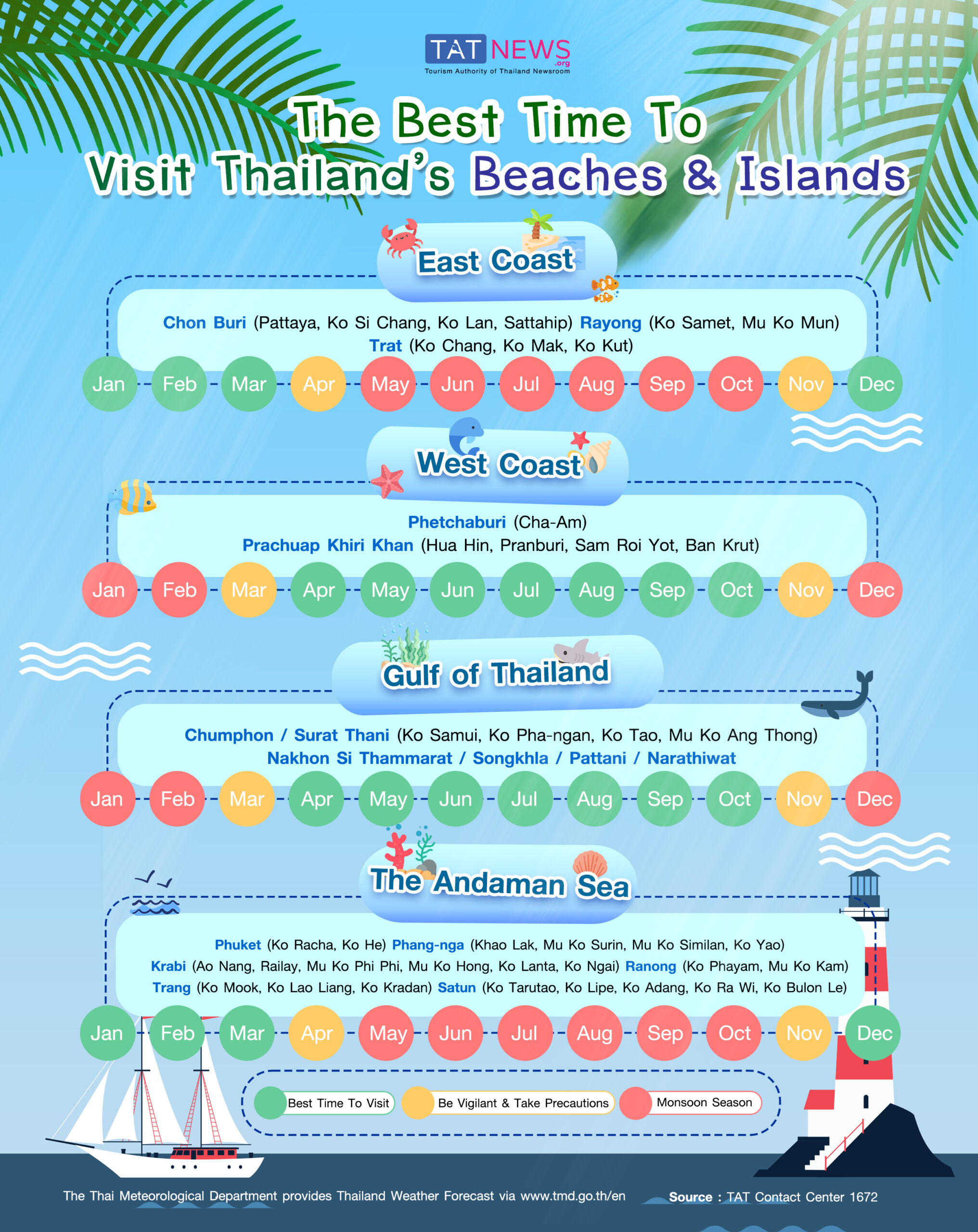
The southern peninsula presents the most complex weather patterns, with the west coast (Andaman Sea) and east coast (Gulf of Thailand) experiencing opposite monsoon patterns. This geographical quirk means that while one coast may be experiencing heavy rains, the other could be enjoying perfect beach weather.
Best Time to Visit Thailand by Region - 2024 Weather Guide
| Region | Best Months | Temperature Range | Rainfall Level | Key Considerations |
|---|---|---|---|---|
| Bangkok & Central Plains | November - February | 25-30°C | Low (20-40mm) | Cool and dry season, ideal for sightseeing and outdoor activities |
| Northern Thailand (Chiang Mai, Chiang Rai) | November - February | 20-28°C | Very Low (10-25mm) | Coolest temperatures, clear skies, perfect for trekking and cultural tours |
| Eastern Coast (Koh Samui, Koh Phangan) | December - April | 26-32°C | Low to Moderate (30-80mm) | Dry season on Gulf of Thailand side, excellent for beach activities |
| Western Coast (Phuket, Krabi) | November - April | 24-32°C | Low (20-50mm) | Dry season on Andaman Sea side, best for diving and water sports |
| Northeastern Thailand (Isaan) | November - February | 22-30°C | Very Low (5-20mm) | Driest region, comfortable temperatures, ideal for cultural exploration |
| Southern Peninsula (Hat Yai, Songkhla) | December - March | 26-33°C | Moderate (40-100mm) | Less crowded, good weather between monsoon seasons |
Understanding these regional variations is essential for planning multi-destination trips within Thailand. Savvy travelers can follow the good weather across different regions, maximizing their experience while minimizing weather-related disruptions. This regional approach to trip planning allows for year-round travel opportunities, regardless of when you visit Thailand in 2024.
Regional Weather Breakdown: When to Visit Each Area
Thailand's diverse geography creates distinct microclimates across its regions. Understanding these regional variations is crucial for planning your perfect trip, as the best time to visit Thailand in 2024 depends heavily on which areas you plan to explore.
Northern Thailand Weather Patterns
Northern Thailand, including popular destinations like Chiang Mai, Chiang Rai, and Pai, experiences the most pronounced seasonal variations. The cool season from November to February brings comfortable temperatures ranging from 15-25°C, making it the ideal time for trekking, temple visits, and exploring hill tribe villages. During the hot season (March-May), temperatures can reach 40°C, while the rainy season (June-October) brings heavy downpours that can disrupt outdoor activities.
Monthly Temperature and Rainfall Patterns Across Thailand's Four Regions (2024)
The mountainous terrain of the north creates cooler evenings year-round, with December and January nights occasionally dropping to 10°C in higher elevations. This region sees the least rainfall during the cool season, making it perfect for outdoor adventures and cultural exploration.
Central Thailand and Bangkok
Central Thailand, anchored by Bangkok, follows the classic three-season pattern but with more moderate temperature variations. The metropolitan heat island effect makes Bangkok consistently warmer than surrounding areas, with temperatures rarely dropping below 20°C even in the coolest months.
November through February remains the optimal period for visiting central Thailand, offering pleasant weather for temple hopping, river cruises, and exploring historical sites in Ayutthaya and Sukhothai. The hot season brings intense heat and humidity, while the rainy season can cause significant flooding in low-lying areas of Bangkok.
Eastern and Western Coastal Regions
Thailand's eastern coast, including Pattaya, Koh Chang, and Koh Samet, experiences a slightly different weather pattern compared to the western coast. The eastern seaboard typically sees less rainfall during the traditional rainy season, making it a viable alternative when other regions experience heavy precipitation.
The western coast, featuring destinations like Phuket, Krabi, and the Phi Phi Islands, follows the monsoon patterns more closely. The southwest monsoon brings heavy rainfall from May to October, while the northeast monsoon affects the region from November to March, though with much less intensity.
Southern Thailand: Two Distinct Coasts
Southern Thailand presents unique challenges as its two coasts experience opposite weather patterns due to different monsoon influences. The Andaman Sea coast (west side) including Phuket, Krabi, and Koh Lanta, sees its dry season from November to April, with the wettest months being May through October.
Conversely, the Gulf of Thailand coast (east side) featuring Koh Samui, Koh Phangan, and Koh Tao, experiences its driest period from December to April, with the heaviest rainfall typically occurring from September to December. This opposite pattern means you can often find good weather somewhere in southern Thailand year-round by choosing the appropriate coast.
Northeastern Thailand (Isaan)
The northeastern region, known as Isaan, experiences Thailand's most extreme temperature variations and lowest rainfall. This area becomes incredibly hot during the dry season, often exceeding 40°C, while receiving less rainfall than other regions during the wet season. The cool season offers the most comfortable conditions for exploring this culturally rich but less touristy region.
Understanding these regional differences allows you to plan a multi-destination trip that maximizes favorable weather conditions. For instance, you might visit northern Thailand in January, then head to the Andaman coast in February, ensuring optimal weather throughout your journey.
When planning your Thailand travel guide for 2024, consider that climate change has begun affecting traditional weather patterns. Some regions are experiencing more extreme temperatures and unpredictable rainfall, making it even more important to check current weather forecasts and seasonal updates before finalizing your travel dates.
Planning Your 2024 Thailand Trip: Practical Considerations
Successfully timing your Thailand visit requires balancing weather conditions with your travel preferences and budget. The best time to visit Thailand depends on your priorities, whether you seek perfect beach weather, cultural experiences, or budget-friendly travel options.
Monthly Weather Comparison and Travel Recommendations
Each month in Thailand offers unique advantages and challenges. Understanding these patterns helps you align your travel dates with optimal conditions for your planned activities.
November through February represents Thailand's peak tourist season for good reason. During these months, temperatures remain comfortable at 25-30°C across most regions, rainfall drops to minimal levels, and humidity becomes more bearable. However, this period also brings higher accommodation costs and crowded attractions.
March through May challenges visitors with intense heat, particularly in northern and central regions where temperatures can reach 40°C. Despite the heat, this period offers excellent diving conditions in southern waters and fewer crowds at major attractions. The famous Songkran Festival in April provides a unique cultural experience that many travelers find worth the elevated temperatures.
Regional Weather Patterns and Optimal Timing
Thailand's diverse geography creates distinct weather patterns that vary significantly between regions. The northern mountains experience cooler temperatures year-round, while southern coastal areas maintain tropical warmth with varying rainfall patterns.
Northern Thailand, including Chiang Mai and Chiang Rai, offers its best weather from November to February when temperatures drop to comfortable levels and rainfall remains minimal. The cool season here can see temperatures as low as 15°C in mountainous areas, perfect for trekking and outdoor exploration.
Central Thailand, encompassing Bangkok and surrounding provinces, experiences its most pleasant conditions from December to February. The hot season here proves particularly challenging, with urban heat islands making Bangkok uncomfortably warm from March through May.
Southern Thailand splits into two distinct weather patterns. The west coast, including Phuket and Krabi, sees its dry season from November to April, while the east coast, featuring Koh Samui and Koh Phangan, enjoys optimal conditions from February to September.
Essential Packing and Preparation Checklist
Proper preparation ensures comfort regardless of when you visit Thailand. Your packing strategy should reflect both the season and regions you plan to explore.
During the cool and dry season, pack light layers for varying temperatures, especially if visiting northern regions. Sunscreen remains essential year-round due to Thailand's proximity to the equator. The hot season demands lightweight, breathable fabrics and additional sun protection.
Rainy season travel requires waterproof gear, quick-dry clothing, and flexible itinerary planning. While rainfall typically occurs in short, intense bursts, having proper rain protection ensures you can continue exploring comfortably.
Regional Weather Map and Travel Routes
Understanding Thailand's geography helps optimize your travel route based on seasonal weather patterns. Moving between regions during your trip allows you to follow optimal weather conditions.
Many experienced travelers recommend starting in northern Thailand during the cool season, then moving south as temperatures rise. This strategy allows you to experience diverse landscapes while maintaining comfortable weather conditions throughout your journey.
Budget Considerations and Seasonal Pricing
Thailand weather patterns directly impact travel costs, with peak season pricing occurring during optimal weather months. Understanding these fluctuations helps budget-conscious travelers find the best value.
The rainy season offers significant savings on accommodation and activities, often with 30-50% discounts compared to peak season rates. However, some activities may be limited, and transportation can face weather-related delays.
Shoulder seasons, particularly late October and early March, provide an excellent balance of reasonable weather and moderate pricing. These periods offer good weather conditions without peak season crowds and costs.
Planning your Thailand visit in 2024 requires considering multiple factors beyond just weather. By understanding regional climate patterns, seasonal variations, and practical considerations, you can time your trip to match your preferences and budget while maximizing your Thai adventure experience.
No comments yet. Be the first to share your thoughts!