

Best seasons for your trip
Thailand’s weather divides into three distinct periods, but your comfort largely depends on choosing between the dry season and the green season. The dry season, running from November to April, offers the most reliable conditions for travel. During these months, temperatures are cooler and humidity drops, making it easier to explore temples, hike islands, or navigate bustling cities without the exhaustion that comes with peak heat.
The green season, typically from May to October, brings heavy rainfall and high humidity. This doesn’t mean the country shuts down; in fact, the rain often comes in short, intense bursts, leaving plenty of time for activities. However, sea conditions can be rough, limiting boat access to certain islands, and some rural roads may become difficult to traverse. Travelers on a tight schedule or those prioritizing beach days usually avoid this window.
Crowd levels track closely with the dry season. November through February is peak tourist time, meaning higher prices for flights and accommodation, as well as crowded attractions. If you prefer a quieter experience, consider the shoulder months of March and April. These weeks still offer dry weather but with fewer tourists and slightly lower costs, though temperatures begin to rise significantly in April.
The table below compares the key differences between the two main seasons to help you decide when to book.
| Season | Months | Rainfall | Crowd Level | Best For |
|---|---|---|---|---|
| Dry Season | Nov–Apr | Low | High (Nov–Feb) | Beaches & Island Hopping |
| Green Season | May–Oct | High | Low | Budget Travel & Culture |
For most first-time visitors, targeting the early dry season (November–February) provides the best balance of weather and accessibility. If you are flexible, the late dry season (March–April) offers a good compromise between weather reliability and crowd density, provided you can handle the heat.
Bangkok to Chiang Mai route
The 700-kilometer journey north from Thailand’s capital is the backbone of most northern itineraries. You can cover the distance by overnight train, sleeper bus, or domestic flight, but the rail route remains the most popular choice for travelers seeking a balance of comfort, cost, and scenery. The trip typically takes between 10 and 13 hours by train, or roughly 12 hours by road, depending on traffic and stops.
Book the overnight sleeper train
The State Railway of Thailand (SRT) operates daily overnight services from Bangkok’s Hua Lamphong station (now largely replaced by Bang Sue Grand Station for long-distance trains) to Chiang Mai. Booking the 9:30 PM departure is standard, allowing you to sleep through the night and arrive in Chiang Mai around 9:30–10:30 AM the next day. Second-class sleeper berths are affordable and offer a fan-cooled compartment with curtains for privacy. First-class air-conditioned private rooms provide more space and include breakfast, making them a comfortable upgrade for the long haul. Tickets sell out quickly during peak season, so reserve at least two weeks in advance via the official SRT website or a trusted local agent.
Consider the overnight bus alternative
If train tickets are unavailable or you prefer a faster, more direct road journey, overnight buses are a reliable backup. Companies like Kamphaeng Bus and Sombat Tour operate modern sleeper buses with reclining seats or flat berths, air conditioning, and complimentary snacks. The journey takes approximately 12–14 hours, often arriving in Chiang Mai slightly earlier than the train. While less scenic than the rail route, the bus is more frequent and often cheaper. Ensure your bus company provides a wristband or lock for your luggage to prevent theft during stops.
Factor in travel time and cost
Budgeting for this leg requires balancing time against money. A second-class train ticket costs around 600–800 THB, while a sleeper bus seat ranges from 500–700 THB. Domestic flights from Bangkok to Chiang Mai take only one hour but cost significantly more, often 2,000–4,000 THB one-way, unless booked well in advance or during sales. If you choose the train, arrive at the station at least 45 minutes early to navigate security and find your platform. For buses, terminals in Bangkok are well-connected to public transport, but verify your departure point, as some operators use different terminals.
Stop in Ayutthaya or Kamphaeng Phet
Many travelers break the journey with an overnight stop in Ayutthaya, a UNESCO World Heritage site just 75 kilometers north of Bangkok. The city offers easy access to ancient temple ruins and a relaxed atmosphere, making it a perfect mid-point. Trains stop here, and buses pass through, allowing for flexible scheduling. Alternatively, Kamphaeng Phet serves as a gateway to northern Thailand’s mountainous regions if you plan to extend your trip into the north’s highlands after Chiang Mai.
Pack for the journey
Regardless of your transport choice, pack light. Overhead bin space on buses and trains is limited, and you’ll be moving through stations and terminals. Bring a neck pillow, earplugs, and a light jacket, as train compartments and bus cabins can be chilly at night. Download offline maps and entertainment, as cellular service can be spotty in rural sections of the route. A reusable water bottle is essential, as you can refill it at stations along the way.
Street food and dining highlights
Thailand’s culinary reputation rests on its street food, where the best meals are often found at plastic tables on busy sidewalks. Navigating this scene requires knowing where to look and when to eat to avoid crowds while ensuring freshness. The following sections break down the essential experiences for a Thai Trip Lover, focusing on practical details like timing, location, and what to expect.
Bangkok’s Chinatown (Yaowarat)
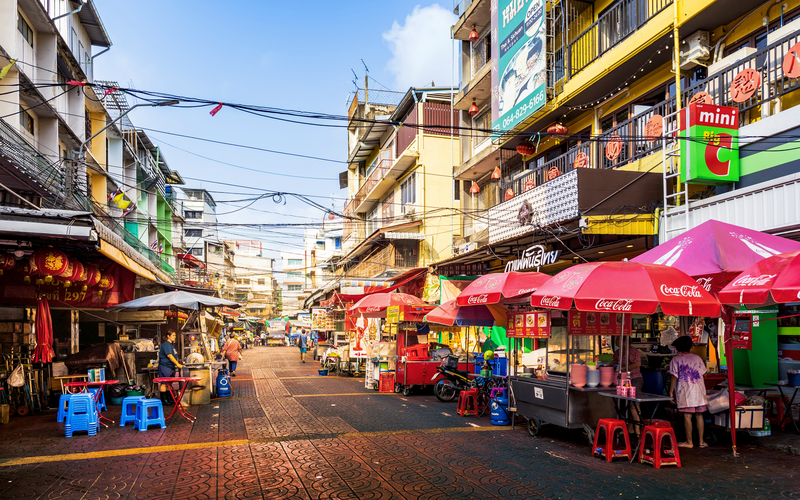
Yaowarat Road transforms into a massive open-air kitchen after sunset. This is the premier destination for late-night dining, with stalls lining the entire stretch. Arrive between 7:00 PM and 8:00 PM to secure a table at popular spots like Jay Fai, though expect long waits. For a more casual experience, walk further down the side streets where seafood stalls offer fresh crab and prawns at lower prices. Cash is king here; most vendors do not accept cards.
Chiang Mai’s Night Bazaar
The Night Bazaar in Chiang Mai offers a curated street food experience along Ratchadamnoen Road. Unlike Bangkok’s chaotic sprawl, this area is organized and pedestrian-friendly. Focus on the northern end near the moat for the most authentic local vendors, avoiding the main thoroughfare which caters heavily to tourists. Try khao soi (curry noodle soup) at dedicated shops rather than general stalls. The area is lively from 6:00 PM to 10:00 PM, with prices slightly higher than in local markets but still reasonable.
Phuket’s Weekend Night Market
Phuket Town’s Weekend Walking Street (Soi Rommanee) provides a vibrant mix of local culture and food. This market runs only on Saturdays and Sundays from 4:00 PM to 10:00 PM. The food stalls here are concentrated in the back alleys off the main street. Look for hokkien noodles and fresh tropical fruit shakes. This is an excellent opportunity to sample regional Phuket cuisine, which often features more seafood than mainland Thai food. Bring small bills, as change can be scarce during peak hours.
Cultural sites and etiquette
Thailand’s cultural sites are the heart of the travel experience, but they demand respect. The most visible rule is dress code. Temples, or wats, require shoulders and knees to be covered. Loose linen trousers or a sarong work well in the heat. Many major temples near Bangkok and Chiang Mai offer sarong rentals at the entrance, usually for 50–100 baht, but bringing your own is faster and cleaner.
Footwear is the next immediate consideration. You will remove shoes before entering any temple building or home. This includes the main prayer halls and sometimes the surrounding courtyards. Look for the pile of shoes at the entrance; if there are none, the area is likely still considered sacred. Wear socks or slip-ons that are easy to take off, as you will be doing this frequently.
Behavior inside the temple grounds is equally important. The Buddha image is the focal point of reverence. Never climb on structures to get a better photo, and never turn your back on the main Buddha image while sitting. If you are sitting on the floor, keep your feet tucked away and point the soles of your feet toward no one, especially monks or monks’ quarters.
Monks hold a special place in Thai society. Women must never touch a monk or hand objects directly to them. If you need to give something to a monk, place it on a table or cloth for them to pick up. Keep your voice low and avoid loud laughter. The atmosphere should be quiet and contemplative.
When visiting royal palaces or the Grand Palace in Bangkok, the dress code is stricter. No shorts, no sleeveless tops, and no ripped jeans. Closed-toe shoes are often required. These sites are crowded, so move slowly and keep your belongings close.
Pre-departure checklist
Before you book flights or hotels, verify these essentials to avoid last-minute surprises. A smooth trip starts with the right paperwork and local connectivity.
Many nationalities can enter Thailand visa-free for 30–60 days, but rules change. Check the Royal Thai Embassy website for your specific passport requirements and entry conditions well in advance.
Healthcare in Thailand is excellent but expensive for foreigners. Purchase a policy that covers medical evacuation and hospitalization, especially if you plan to snorkel or ride motorbikes.
Buy a Thai SIM card at the airport upon arrival or activate an eSIM before you land. This ensures you have maps and translation apps ready immediately, which is vital for navigating transport hubs.
Carry small denominations of Thai Baht for street food and tuk-tuks. While cards work in malls, having cash on hand prevents hassle at smaller vendors and temples.
Common traveler: what to check next
Before you lock in your dates, it helps to clear up the practical details that often cause last-minute stress. Thailand is generally welcoming to visitors, but the rules around money, safety, and entry requirements have specific nuances that vary by nationality and travel style.
No comments yet. Be the first to share your thoughts!